


-

How to Choose a Linear Damper: A Complete Selection Guide
Introduction A linear damper is built with an internal spring in the second half of its stroke. When a door or drawer approaches the closed position, the moving part begins to compress this spring. The compression generates resistance that automatically slows down the cl...Read more -

Linear Dampers for Sliding Systems
一:Why linear dampers are used in sliding systems Linear dampers are widely used in sliding systems for several technical reasons: 1.Vector alignment (direct motion matching) Sliding motion is linear. A linear damper’s piston moves along the same linear path, so ...Read more -

What Is a Linear Damper?
1.What Is a Linear Damper A linear damper is a mechanical damping component used to control motion speed and reduce impact in moving systems. It is widely used in various mechanical structures where controlled movement or buffering is required. Unlike rotary dampers, whi...Read more -

Application of Rotary Dampers in Tabletop Sockets
A tabletop socket is a built-in power and charging solution for office desks and conference tables. By integrating power outlets and charging ports into the desktop, it helps reduce cable clutter and improve workspace efficiency. Most tabletop sockets are equipped with a...Read more -

Application of Dampers in Refrigerator Drawers
Refrigerator drawers are typically large and deep, which naturally increases their weight and sliding distance.From a mechanical perspective, such drawers should be difficult to push in smoothly. However, in daily use, this rarely becomes a problem. The primary reason is...Read more -

Application of Rotary Dampers in Automotive Glove Boxes
In automotive interior systems, Rotary Dampers are widely used in glove box applications on the front passenger side to control rotational movement and ensure a smooth, controlled opening motion. Without a rotary damper, a...Read more -

How to calculate torque on hinge?
Torque is the twisting force that causes an object to rotate. When you open a door or twist a screw, the force you apply multiplied by the distance from the pivot point creates torque. For hinges, torque represents the rotational force generated by the lid or door due to...Read more -

Application of Rotary Dampers on Automotive Trunk Handles
Rotary dampers are widely used in external automotive trunk handles, especially those designed with a compact, embedded structure. Without damping, these handles rely solely on spring force to return, which often results in fast rebound, strong impact, noticeabl...Read more -

Rotary Dampers in Automotive Grab Handles
If you are sitting in a car right now, try looking up at the ceiling. You’ll notice that both the front passenger seat and the rear seats are equipped with grab handles. These handles may seem insignificant in daily use, but they are an essential part of a vehic...Read more -

The Application Value of Linear Dampers in Cabinet Systems
In modern cabinet design, the smoothness and quietness of opening and closing actions have become important factors that influence user experience. Cabinets in kitchens, bathrooms, wardrobes, and workspaces undergo frequent daily use. In modern cabinet design, t...Read more -

Rotary Damper for EV Charging Port — Enhancing User Experience and Safety
As the electric vehicle (EV) market continues to grow, user experience in both interior and exterior components has become increasingly important. One key area is the EV charging port cover, a component that users interact with frequently. Without proper automotive hinge...Read more -
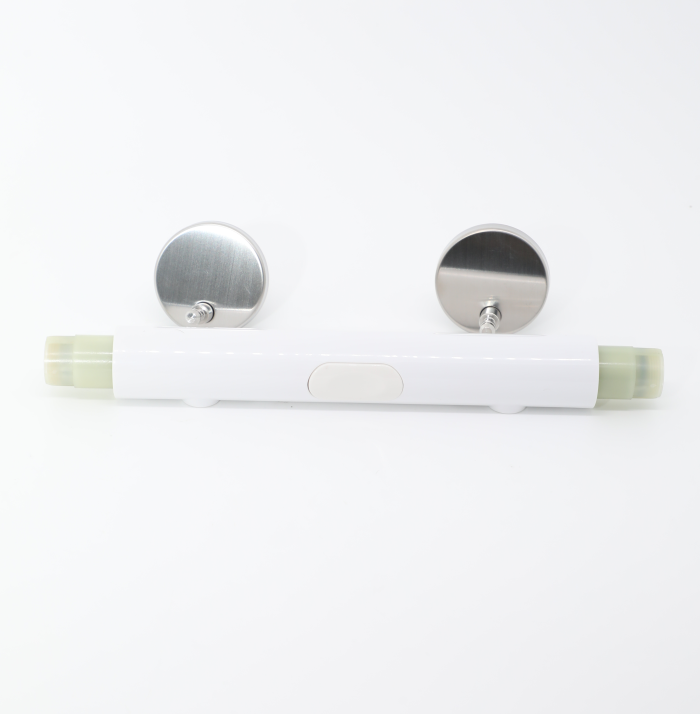
What is a Damper Hinge ?
A hinge is a mechanical component that provides a pivot point, allowing relative rotation between two parts. For example, a door cannot be installed or opened without hinges. Today, most doors use hinges with damping functionality. These hinges not only connect the door ...Read more


