



Rotary dampers are motion-control components designed to slow and control the movement of rotating parts. By generating resistance during rotation, they help prevent sudden movement, reduce impact, and create smoother, quieter opening and closing motion.
This introductory guide explains the basic working principle of rotary dampers, where they are commonly used, the benefits they provide, and the key factors to consider when selecting a rotary damper for an application.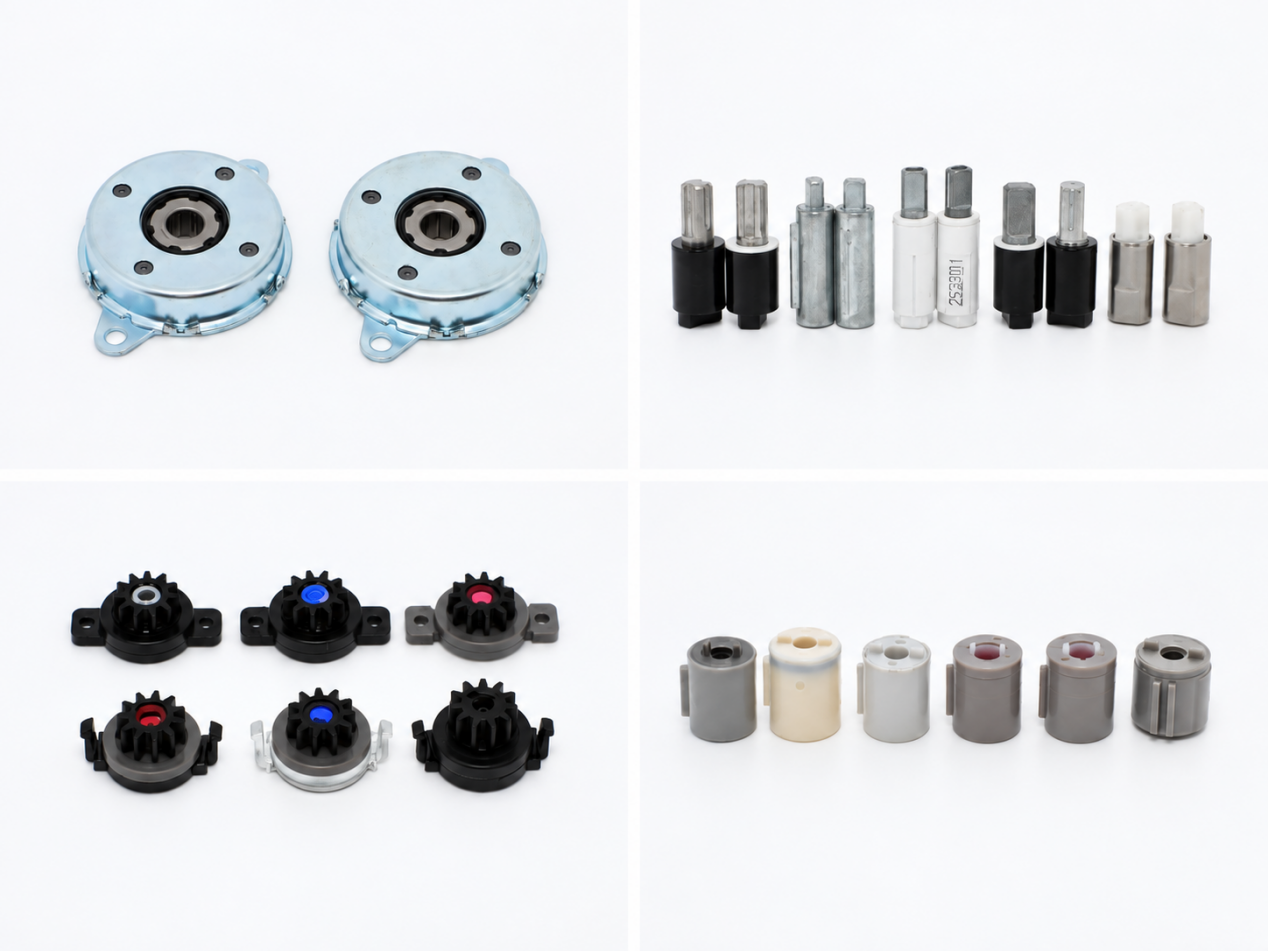
Section 1: Principles of Rotary Dampers
Rotary dampers typically use viscous silicone oil to create resistance against rotational movement. As the internal rotor or damping element moves, the fluid generates viscous resistance within the damper’s internal gaps, chambers, or flow paths.
Damping performance is influenced by factors such as internal structure, fluid viscosity, rotational speed, temperature, and damper geometry. Together, these factors determine how smoothly and at what speed the connected component moves.
For a more detailed explanation of rotary damper structure and working principles, see What Is a Rotary Damper?
Section 2: Applications of Rotary Dampers
Rotary dampers are widely used in products where rotational movement needs to be slowed, controlled, or made smoother. They are especially useful in lids, covers, compartments, armrests, and other rotating mechanisms that should not open or close abruptly.
Automotive Applications
In automotive interiors, rotary dampers are commonly used in glove compartments, center consoles, cup holders, armrests, storage boxes, and other moving components. They help create smoother, more controlled motion while reducing impact, noise, and sudden movement.

Furniture Applications
In furniture, rotary dampers can be integrated into cabinet doors, storage compartments, adjustable seating components, and other rotating mechanisms. They help improve opening and closing feel while preventing parts from moving too quickly.
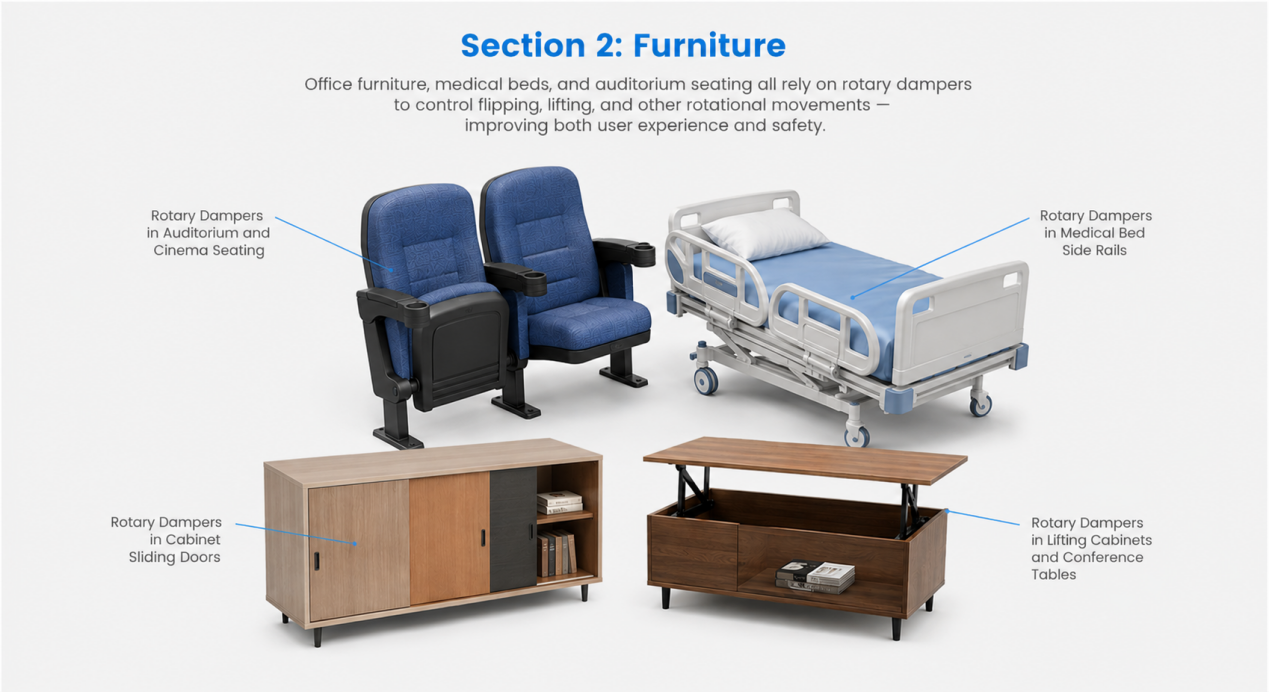
Home Appliance and Sanitary Applications
Rotary dampers are also used in household appliances and sanitary products that require controlled opening or closing. Typical examples include appliance lids, covers, control panels, toilet seats, and other rotating parts.
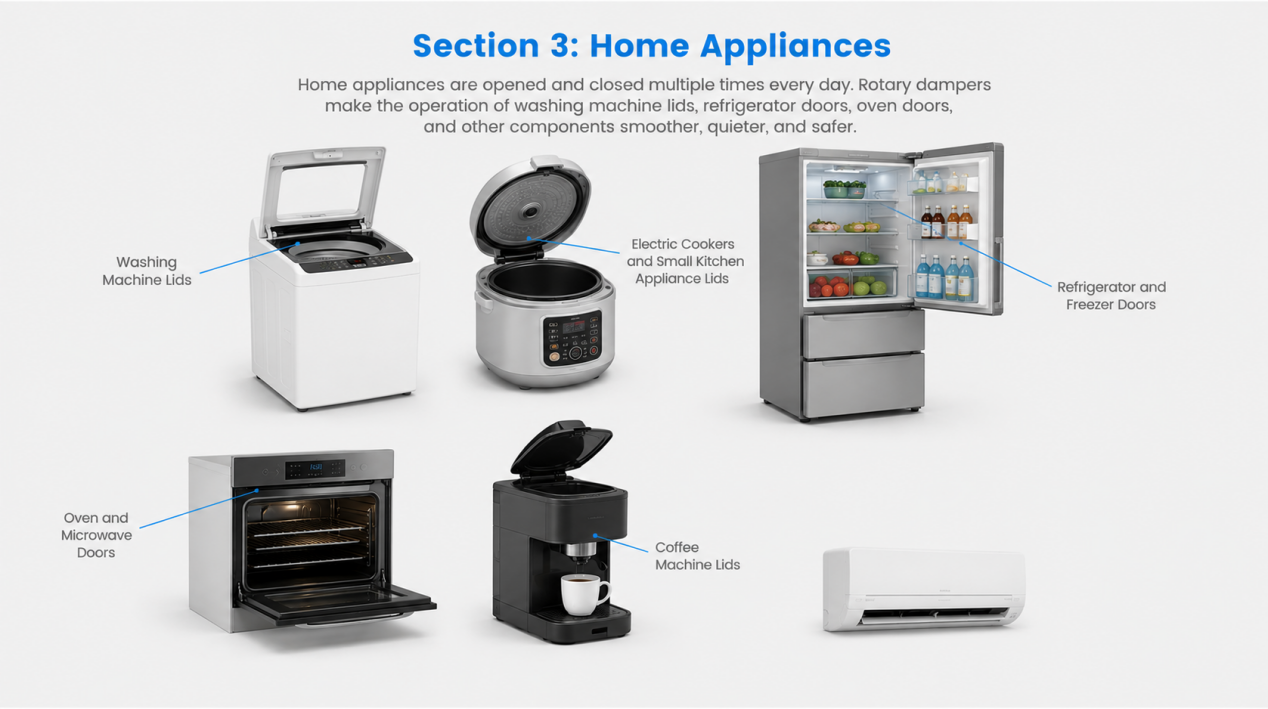
For more detailed examples across different industries, see Rotary Damper Applications: Where Are They Used?
Section 4: Key Considerations When Selecting a Rotary Damper
When selecting a rotary damper for an application, several factors should be considered to ensure suitable damping performance, smooth motion, and reliable operation.
1. Operating Temperature and Damping Performance
Temperature can affect the viscosity of the damping fluid, which in turn influences the resistance generated during rotation and overall damping performance.
For applications exposed to significant temperature changes, the expected operating temperature range should be considered when selecting a damper.
2. Damping Torque
The required damping torque depends on factors such as the weight of the moving component, its center of gravity, installation geometry, rotational speed, and the desired opening or closing behavior.
Different rotary damper structures are suited to different torque levels, rotation angles, installation spaces, and damping directions. For a detailed comparison, see Types of Rotary Dampers: Disk, Gear, Barrel and Vane Explained.
If you need to calculate the required torque or select a specific model, see How to Choose the Right Rotary Damper for Your Application.
3. Size and Form Factor
Available installation space is another important consideration. Rotary dampers are available in different sizes and configurations to suit different mechanical layouts, torque requirements, and space constraints.
Before selecting a model, consider the mounting method, available clearance, shaft or gear connection, required rotation angle, and surrounding mechanism.
4. Operating Environment and Material Requirements
The operating environment can affect the materials, sealing, and construction required for a rotary damper.
Applications exposed to moisture, chemicals, heat, dust, or other demanding conditions may require specific materials, sealing arrangements, or corrosion-resistant designs.
Where regulatory or material-compliance requirements apply, confirm that the selected damper meets the relevant requirements for the final product and target market, such as RoHS compliance where applicable.
5. Customization Requirements
In many applications, a standard rotary damper can meet the required performance. However, some mechanisms may require different torque characteristics, dimensions, mounting structures, or other application-specific features.
If a standard model does not meet these requirements, customized options may be available depending on the product series and project requirements.
Find the Right Rotary Damper
Need help selecting a rotary damper for your application? Explore our Rotary Damper solutions and selection support.
Already know the specifications you need? View all Rotary Damper models.
Post time: Nov-29-2023


